What does Texas require for an electrician to be licensed?
Texas requires a license for non-exempt electrical work. The Texas Department of Licensing and Regulation (TDLR) says that anyone who performs, or offers to perform, that work must be licensed and must do it through a licensed electrical contractor. The Occupations Code says the same: no person or business may do or offer electrical work without a license, except in listed cases.
Texas has two layers. People hold individual licenses. Companies hold a contractor license. You want both to be in order.
What are the license levels?
TDLR lists many individual license types on its electrician page. The ones you will hear most are below.
| License | Who holds it | What it means for you |
|---|---|---|
| Apprentice electrician | A person in training | Works under supervision, not on their own |
| Residential wireman | A person licensed for residential wiring | Works in homes within that license’s scope |
| Journeyman electrician | A skilled tradesperson | Does the hands-on electrical work |
| Master electrician | A senior individual license | A contractor must have one on record |
| Electrical contractor | The business | The company that sells the job and stands behind it |
TDLR also licenses other groups, such as maintenance electricians, sign electricians and residential appliance installers. For a home project, focus on the company license and the master electrician behind it. Our glossary explains the terms master electrician and journeyman electrician.
Why does the master electrician matter?
TDLR’s compliance guide says an electrical contractor must either hold a master electrician license itself or employ a licensed master electrician who assigns that license number to the company as the “Master Electrician of Record.” In plain words: a licensed contractor has a licensed master electrician tied to it. That is the person accountable for the company’s electrical work.
How do I look up an electrician’s license on TDLR?
Use the free license search on the TDLR website. It takes a few minutes. You need the company name or the license number from the estimate, the truck or the invoice. Then confirm the license is active and that the name matches the business in front of you.
Follow these steps.
- Ask the company for its electrical contractor license number before you agree to work. A real contractor will give it to you without fuss.
- Open the TDLR electricians page at tdlr.texas.gov/electricians. It links to “Search Licenses.”
- Search for the business by license number or name, using whatever the search page offers.
- Open the result. Check that the license type is an electrical contractor license and that the status is current.
- Match the business name and phone number to what is on your estimate. A license for a different business does not count.
- If the person at your door is an individual, ask for the individual license too, and search that name the same way.
If you cannot find a license, do not guess. Ask the company to explain. A typo in a name is common. A company with no license is a different problem.
Where else can I see the license number?
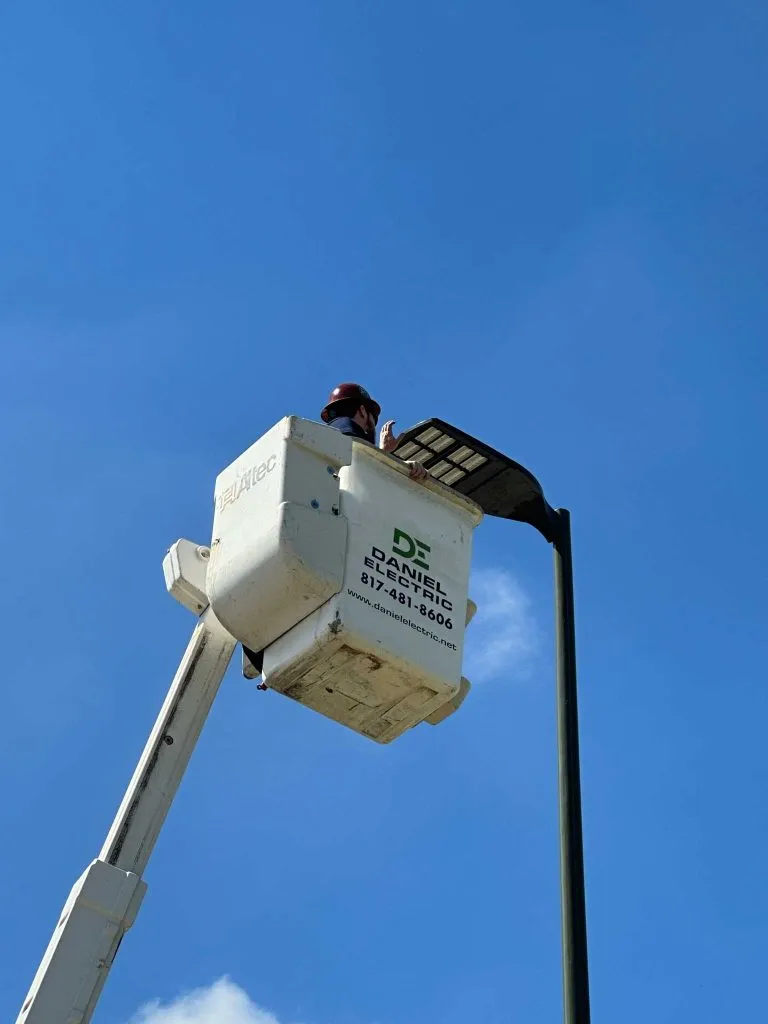
TDLR says an electrical contractor’s license number is written with the letters TECL, as in “TECL 1234.” A licensed contractor must show its name and license number on both sides of each vehicle used for electrical work. The letters must be a contrasting color and at least two inches high. So you can also read it off the truck.
As an example of how it looks on a real company, Daniel Electric shows its license on its website as TECL #21005. You can search that number on the TDLR license search to see how a result reads. Treat that the same way you would any other company: check the record yourself rather than trusting a web page.
What should a written estimate include?
A written estimate should name the company and show how to reach it. TDLR says all proposals, invoices and written contracts from a contractor must show the contractor’s name, address, phone number and license number. Invoices and written contracts must also carry TDLR’s regulation notice with its contact details.
Use this checklist when you compare estimates.
| Item to look for | Why it matters |
|---|---|
| Company name, address, phone, license number | Required by TDLR on proposals and contracts; lets you verify |
| Clear scope of work | Shows exactly what is and is not included |
| Parts and materials listed | Lets you compare the same job across companies |
| Who pulls the permit and schedules the inspection | Avoids unpermitted work |
| Warranty terms in writing | Tells you what happens if something fails |
| What could change the quote | Hidden conditions are where surprise bills come from |
| Start date and how long it will take | Helps you plan around the work |
How should I compare estimates?
Compare scope first. Two estimates for the “same” job often cover different work. One may include the permit, a new breaker, and cleanup. Another may not. Line them up side by side and ask each company to explain any gap.
A load calculation is one example. For a service upgrade or a new circuit, a careful company checks what your panel can handle. If one estimate skips that step and another includes it, you are not comparing like with like.
What drives a quote? The size of the job, the condition of your existing wiring, the parts, the access to the work area, permit and inspection needs, and utility steps. We do not publish prices, and no honest guide can give you a number without seeing your home. Free quotes are how you find out. Daniel Electric states that it gives free quotes on new installations.
What about permits, inspections and city rules?
Cities set their own permit and inspection rules. TDLR’s compliance guide says the local licensing or inspecting authority inspects work in its area, and that TDLR does not perform inspections required for local permitting and code requirements. Ask your electrician whether the job needs a permit and who will pull it.
City rules differ across the Southlake, Grapevine and Colleyville area. For example, the City of Southlake says trade contractors with a current state license must register with the city. Colleyville says contractor registration and permitting go through an online portal. Grapevine and Keller have their own pages too. Read our posts on Southlake electrical permits, Keller electrical permits and Grapevine permits and contractor registration for local detail.
Your city’s page decides what is required. Learn what the electrical permit covers and what an electrical inspection checks.
Can a homeowner do their own electrical work?
The statute lists an exception for work on a dwelling by the person who owns and lives in it, when a municipal ordinance does not regulate that work. Many cities do regulate it. We do not advise do-it-yourself work inside panels or boxes. Call a licensed electrician.
What are the red flags when hiring an electrician?
The biggest red flag is a company that will not give you a license number, or one that does not check out on TDLR. Other warning signs are a quote that is verbal only, pressure to pay in full up front, no permit for work that needs one, and refusal to put terms in writing.
Watch for these.
- No license number on the estimate, invoice or truck. TDLR requires it on paperwork and contractor vehicles.
- The name on the license does not match the business. Ask why.
- “We don’t need a permit.” Maybe true for minor repairs. Maybe not. Check the city’s page and ask the electrician to explain.
- A cash-only deal with no paper. You lose your warranty and your record of the work.
- High-pressure tactics. A real electrical hazard is serious, but an honest company explains it and lets you decide.
- No warranty in writing. Ask what is covered and for how long.
- Door-to-door storm chasers. After a big storm, ask for the license number and verify it before you let anyone into your home.
If something goes wrong, TDLR takes complaints about licensed people and businesses. The electricians page links to its complaint process.
What should I ask before I hire?
Ask direct questions. A good company answers them without delay.
- What is your electrical contractor license number?
- Who is the master electrician on record?
- Will you pull the permit and schedule the inspection?
- Will you give me a written estimate with the scope of work?
- What warranty do you give on the work and on the parts?
- Who will be at my home, and are they licensed?
For reference, Daniel Electric is family owned and operated and says it has served the area since 1988. It says its electricians are drug and background tested. Its warranty terms are on the warranty page, and you can read about the team on the about page. Verify any contractor, including us, using the TDLR search.
Next step
Ready for a written estimate? See our residential electrician page, call Daniel Electric at (817) 481-8606, or send a request through the quote form at /contact.
Frequently asked questions
How do I check that an electrician is licensed in Texas?
Go to the TDLR electrician page and open Search Licenses. Look up the company name or the license number from the estimate. Check that the license is active and matches the business and the people you met. If you cannot find it, ask the company to explain before you sign anything.
What does TECL mean?
TECL stands for the Texas Electrical Contractor License. TDLR says the number for an electrical contractor is shown with the letters TECL, as in "TECL 1234." A licensed contractor must display its name and license number on both sides of each vehicle it uses for electrical work.
Can an unlicensed handyman do electrical work in Texas?
Generally no. Texas law bars a person or business from performing or offering to perform electrical work unless licensed, with listed exceptions. One exception covers work on a dwelling by the person who owns and lives in it, if no city ordinance regulates that work. Your city may still require a permit.
Does the electrician or the homeowner pull the permit?
It depends on the city. Many cities require a permit for electrical work and ask the licensed contractor to register with the city. Ask the electrician up front who handles the permit and the inspection, and confirm the rule with your city's building department.
What should a written estimate include?
TDLR says contractor proposals, invoices and written contracts must show the contractor's name, address, phone number and license number. A good estimate also lists the scope of work, parts, who pulls the permit, any warranty, and what could change the price. Do not accept a verbal quote only.
Does the city inspect the work, or does TDLR?
The city, county or region with jurisdiction inspects work done in its area. TDLR states that it does not perform inspections required for local permitting and code requirements. TDLR handles licensing and complaints about licensed people and businesses.
Terms on this page
Sources
- TDLR: Electricians
- Texas Occupations Code, Chapter 1305
- Texas Occupations Code, Chapter 1305 (homeowner exception)
- TDLR: Electricians Compliance Guide (vehicles)
- TDLR: Electricians Compliance Guide (master electrician)
- TDLR: Electricians Compliance Guide (inspections)
- City of Southlake: Building Inspections and Code Enforcement
Written by Daniel Electric and checked against the sources above on October 21, 2026. City rules and product guidance change, so check the linked page before you act.