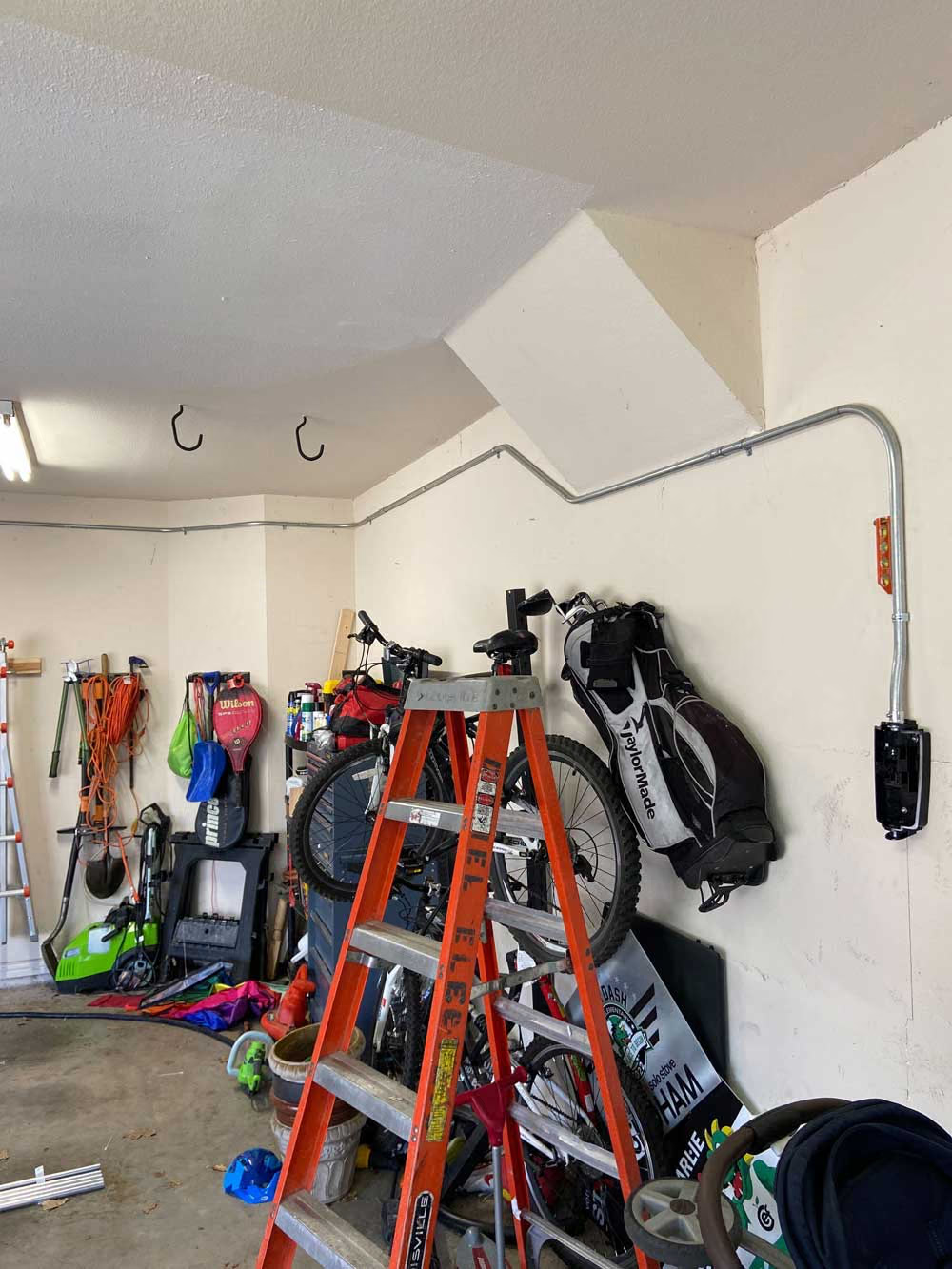
An EV charging station gives you faster, safer charging at home than a standard outlet. Daniel Electric installs home EV chargers in Southlake, TX. We check that your electrical panel can carry the load, install the circuit and charger, and explain the permit and inspection steps in your city.
A check of panel capacity and the best charger location
A dedicated circuit for the charger
Level 2 charger installation in a garage or outdoors
A NEMA 14-50 outlet or a hardwired charger, depending on your choice
A panel upgrade when your panel needs more capacity
Help with permits and inspections
Signs you need it
You bought or ordered an electric vehicle
Overnight charging on a standard outlet is too slow
You use an extension cord or a shared circuit to charge
Your panel is full or older, and you want to add a charger
A charger trips a breaker or will not start a charge
Do I need a Level 2 charger at home?
Not always. DOE says many EV owners meet their daily needs by charging overnight with Level 1 equipment on a dedicated circuit. Level 2 (240 V) is faster, and suits longer commutes or big batteries. See Level 1 charger, Level 2 charger and EVSE. Our home EV charger installation guide compares them.
Can my electrical panel handle an EV charger?
Maybe. DOE says an electrician can tell you whether your home has enough capacity for a charger, and can add circuits to make room. The NEC treats EV charging as a continuous load. Ask for a load calculation and a dedicated circuit. If the panel is short, see electrical panel repair and replacement.
Should I choose a NEMA 14-50 outlet or a hardwired charger?
Both can work. A NEMA 14-50 outlet lets you plug in a portable charger. A hardwired charger connects straight to the circuit. DOE says to check your vehicle maker's guidance and learn the specifications before you buy equipment or electrical services. We help match the charger to the car and the garage.
Can a charger go in the garage or outdoors?
Yes. DOE says residential chargers are often installed in garages, and that outdoor installation and use are also safe, even if the car is charging in the rain. Outdoor installations need outdoor-rated equipment. We help you pick the spot based on the cord length and the circuit route.
Do I need a permit for an EV charger?
Often, yes. DOE says charging installations must follow local and state codes and permits may be required. Westlake, for example, says EV charging stations must be permitted and comply with the 2023 NEC. Rules differ by city, so ask us for yours. See our service areas and the electrical permit entry.
Daniel Electric does not post prices and will not guess. The quote depends on the charger you pick, the distance from the panel, whether the panel needs work, and permit fees in your city. Call (817) 481-8606 for a quote.
Are there rebates for home chargers?
Possibly. DOE says state and utility incentives may be available to help offset the cost of charging equipment. Incentives change, so check with your utility and state before you buy.
Why does my charger keep tripping the breaker?
A fault in the charger, a shared circuit or an overloaded panel can cause it. Stop using it, check the charger's status light and manual, and call a licensed electrician. Do not open the charger or the panel yourself.
Which charger brands do you install?
Ask us when you call (817) 481-8606. Tell us the car and the garage, and we will talk through safety-certified options. DOE recommends buying safety-certified equipment installed by a certified electrical contractor.