What should a facility manager check every quarter?
Check five things: panel areas, lighting, cords and strips, labels, and records. These are all visible without opening any equipment. A short walk-through four times a year helps you catch small problems before they become outages.
NFPA says its maintenance standard, NFPA 70B, covers preventive maintenance for electrical systems in “industrial plants, institutional and commercial buildings, and large multi-family residential complexes.” It also says: “Proactive maintenance strategies can improve system reliability and reduce the likelihood of fire, electric shock, and arc flash incidents.” Read the NFPA 70B entry for a short definition.
| Item | What staff can look for | Call an electrician if |
|---|---|---|
| Panel areas | Clear space, closed doors, no water or rust | You see heat marks, rust, water, or a buzzing sound |
| Lighting | Dark fixtures, flicker, damaged poles or covers | Lights flicker in groups or a pole is damaged |
| Cords and strips | Daisy chains, damaged cords, loads on one strip | Anything feels hot or smells of burning |
| Labels | Readable panel directories, labeled breakers | Directories are wrong or missing |
| Records | Dated log, repair notes, vendor reports | You cannot find the last service report |
What can staff check on panels without opening them?
Staff can check the area around panels. Keep the space in front clear, keep doors closed, and look for water, rust, or scorch marks. A breaker panel, switchgear, or transformer must never be opened by untrained staff.
Listen for buzzing and note any warm surface you can feel from outside. Do not use tools. Write down what you see and call a licensed commercial electrician if anything seems wrong. A trained technician may use thermal imaging to find hot spots without touching live parts. That is a job for a qualified person, not for staff.
What counts as a warning sign at a panel?
A panel that is hot, smells burnt, buzzes, shows rust or water, or has a breaker that trips again and again. Treat these as urgent. Keep people away from the area and call a licensed electrician. If you see smoke or fire, call 911.
What should you look at in lighting?
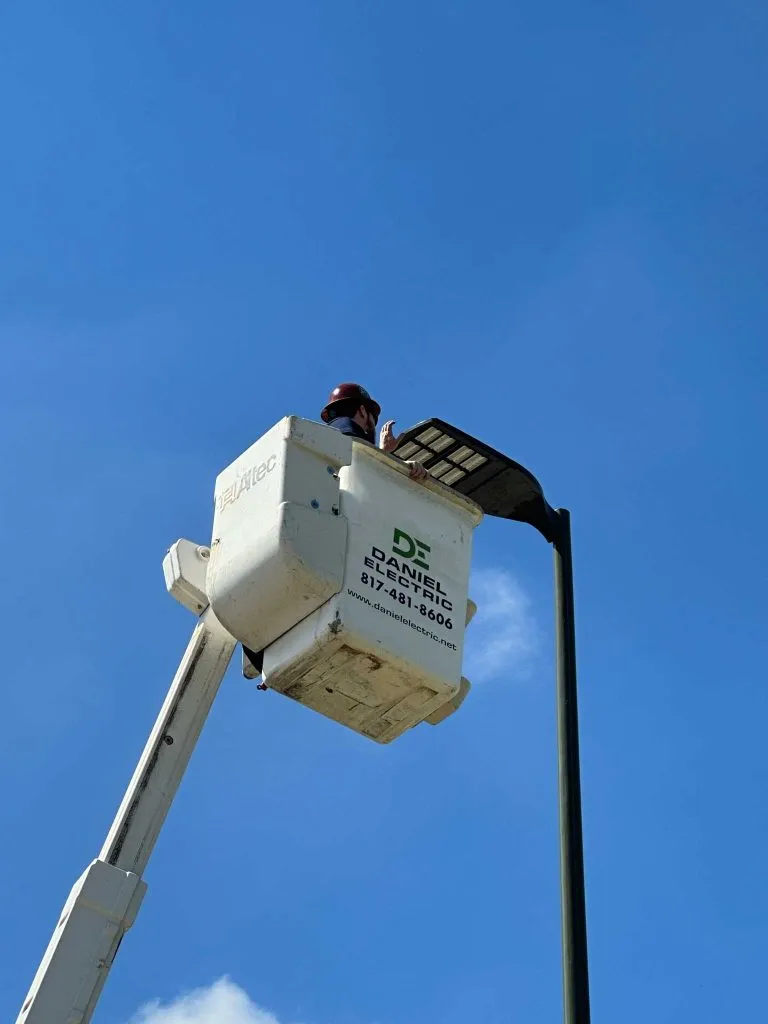
Walk the building and the grounds at dusk once a quarter. Note dark fixtures, flickering lights, and damaged covers or poles. Flickering in a group of lights can point to a power problem, not a bad bulb. Our post on LED bulbs that flicker or buzz explains the common causes.
For lots and exterior lighting, see our parking lot lighting repair page and the parking lot lighting repair guide. A photocell that fails can leave a lot dark or lit all day, so note when lights turn on and off.
Why check cords and power strips in a commercial space?
Cords and strips often grow in offices, break rooms, and storage rooms. A strip plugged into a strip, or a space heater on a cord, is a fire risk. Our post on power strips, surge protectors, and extension cords lists the safe rules.
Check that heat-producing appliances go straight into the wall. Remove damaged cords. If staff rely on cords daily, the space may need more outlets or circuits, and a licensed electrician should assess it.
Why do labels and records matter?
A clear panel directory lets staff shut off the right breaker in an emergency. A dated log shows what changed and when. NFPA says its standard addresses “electrical maintenance program (EMP) development, maintenance intervals, testing methods, and documentation practices.” That is the idea behind a simple log.
Keep a short record for each walk-through: date, who checked, what you saw, and who you called. Keep every electrician report. Read our guide to commercial electrical maintenance for a fuller plan, and the page on commercial electrical services for related work.
Who should do deeper testing?
A licensed commercial electrician or qualified technician should do testing, tightening, and repairs. Staff checks do not replace them. Daniel Electric lists commercial facility maintenance and parking lot lighting repair among its services, and you can ask what fits your site.
How do you build a simple quarterly routine?
Keep the routine short enough that people will actually do it. A one page sheet and a set route work well.
- Pick a fixed week each quarter and assign one person.
- Walk the same route each time: electrical rooms, hallways, break rooms, storage, and exterior lighting.
- Use the five items in the table above as a checklist.
- Mark each item as fine, watch, or call.
- Send every “call” item to a licensed commercial electrician the same day.
- File the sheet with your other building records.
Over time, the sheets show patterns. A panel area that gets wet every spring, or a lot light that fails every few months, is a clear reason to ask for a deeper review. Share the sheets with your electrician before each visit.
Next step
See the commercial electrician page, call (817) 481-8606, or use the quote form at /contact. Daniel Electric says it serves commercial and residential customers and offers free quotes on new installations.
Frequently asked questions
How often should a commercial building have electrical maintenance?
There is no single answer for every building. NFPA 70B describes how to build a documented electrical maintenance program with set intervals based on the equipment and its condition. A quarterly walk-through by staff is a good habit. A licensed electrician should set deeper testing schedules for your site.
Can facility staff open electrical panels?
No. Staff can check that panel areas are clear, labeled, and dry. Opening a panel, removing covers, or touching live parts needs a qualified person. If you see heat, rust, water, or damage near equipment, keep people away and call a licensed commercial electrician.
What records should a facility manager keep?
Keep a dated log of each walk-through, what you saw, and who you called. Keep electrician reports, repair notes, and any permit or inspection records. NFPA says its maintenance standard covers documentation practices. Good records show patterns and help the next technician.
Terms on this page
Sources
Written by Daniel Electric and checked against the sources above on July 27, 2026. City rules and product guidance change, so check the linked page before you act.